
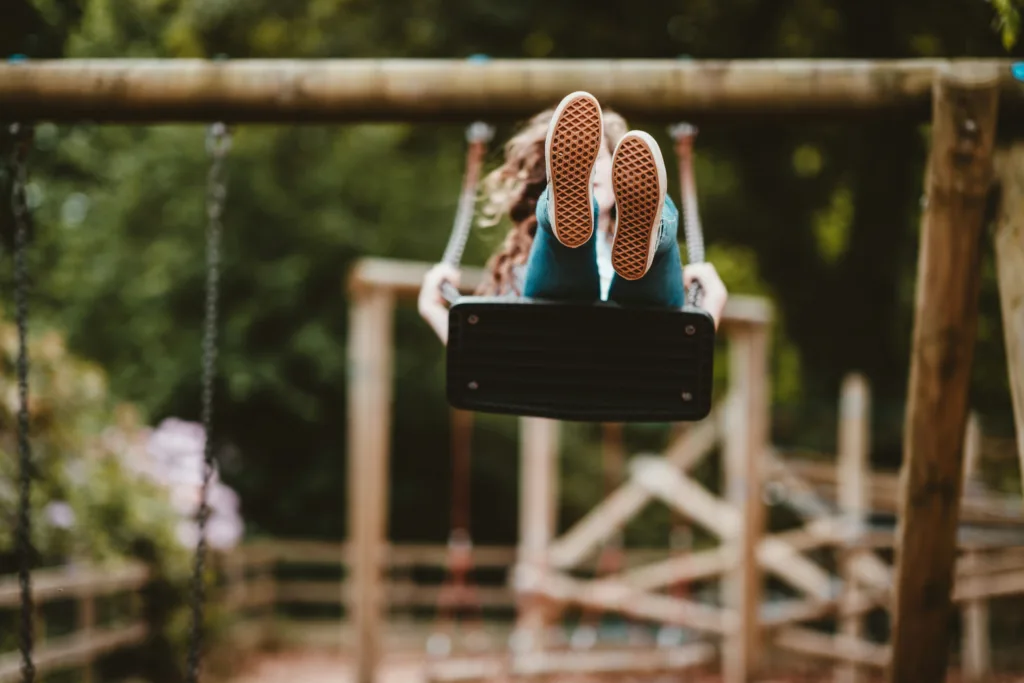
When Healing Feels Like “Acting Younger”
There’s a subtle shift that happens when you start healing from CPTSD. At first, it’s quiet. You notice you’re a little less tense in situations that used to put you on edge. Your body stops its constant scan for what might go wrong. You realize you don’t have to hold everything together quite so tightly.
You actually start to feel safer.
And then something unexpected shows up. You start acting younger. Not immature or irresponsible. Just… younger. Lighter. Softer and more playful.
The Emergence of the Inner Child
It is actually quite a profound shift.
When you’ve spent years, or even decades, in constant hypervigilance, your brain stays locked in survival mode. And in that mode, playfulness isn’t just rare; it’s unsafe.
After all, play requires openness. Curiosity requires presence, and happiness requires a sense of safety. And when your system doesn’t feel safe, those things get pushed aside. You become the adult. The responsible one. The one that has to hold it all together.
Even if you were never supposed to carry that much.
For a lot of us, childhood didn’t really look like childhood. It looked like adapting. Managing and surviving.
We learned to read people quickly. To stay quiet when needed. To anticipate problems before they happened. And to stay in control, because control felt like safety.
For years… that worked. It got us through. But it also meant parts of us had to be buried deep.
So What’s Actually Happening?
When healing begins, your nervous system slowly starts to recalibrate. Where you are no longer stuck in the same level of threat anymore.
And once that happens, something really important shifts. You realize that you don’t need to be “on” all the time. That constant internal pressure, that we all know too well, begins to ease. And in that space that forms, something steps forward.
The part of you that never got to fully develop. That we had to put on pause and keep hidden.
Our sense of play. Curiosity. Our softness. The ability to just “be” without having to always be on edge because we were constantly scanning for danger.
So when you find yourself laughing more, being a little sillier than usual, or reacting with a kind of openness that feels unfamiliar. It’s not regression. It’s access.
Why It Can Feel So Strange
If your identity has been built around being composed, aware, and in control, this newer, lighter version of you can feel almost foreign.
You might even catch yourself thinking:
“Should I be like this?”
“Am I being too much?”
“Is this going to backfire somehow?”
And questioning all these new feelings makes sense, because there is a part of us that still looks at being open as a risk.
We learned how to survive through experience. But now we are starting to learn from new experiences. And it takes time to trust these new feelings and experiences.
Where we can be more relaxed and nothing bad happens. To laugh and still feel safe. And where we can actually let our guard down and the world doesn’t collapse all around us.
It’s in these newfound moments that trust is built.
This Isn’t You Losing Maturity.
It’s easy to assume that feeling “younger” means you’re somehow going backwards. But that’s not what is happening. We aren’t becoming immature. Instead, we are opening up and allowing all the parts we hid to experience the world.
We still have the awareness. The resilience. And the ability to handle things. But now, we are also gaining access to joy. To lightness. To parts of ourselves that weren’t allowed to exist before.
And it’s not a step back. What it is is integration.
Coming Back to Life
Healing isn’t just about reducing symptoms; it’s about expanding your capacity to live. Sometimes that looks like deep emotional processing, but other times, it looks like laughing at something “dumb” and letting yourself feel excitement without shutting it down.
If you’ve noticed this softer, younger energy showing up, don’t rush to hide it. That part of you isn’t a problem to be solved. It’s a sign that you finally feel safe enough to be fully alive
Photo by Annie Spratt on Unsplash