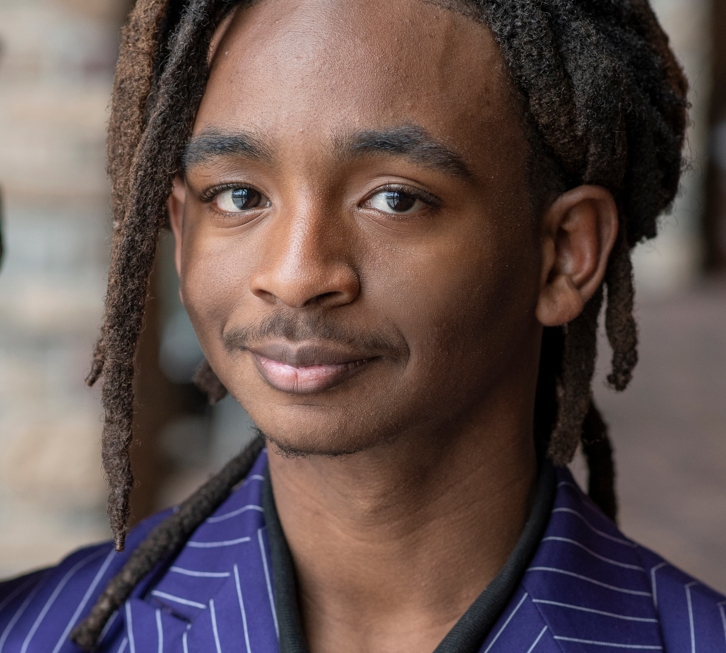
Meet Lawrence
Lawrence C. Harris is a speaker, author, and advocate who helps teens and young adults navigate trauma, mental health, and personal growth. Through his writing and speaking, he encourages others to face difficult experiences with honesty while reminding them that healing is possible.
When did you first realize something from your past was affecting you?
There are a lot of moments I could point to, but one has always stayed with me.
I was 14 years old, sitting on my twin bed surrounded by dirty clothes and trash, asking myself, “Why can’t I keep it together?” No matter how hard I tried, my room always ended up looking the same.
In therapy, I stayed on the surface. I’d say things like, “I feel really sad because my dad hurt my siblings and me.” But underneath that was something much deeper. I believed people only pretended to care about me because they felt obligated to.
I spent nearly sixteen hours a day escaping through video games, social media, or anything else that distracted me from my thoughts. From the outside, I could fake a smile and look like I was getting better. Behind closed doors, I was falling apart.
Whenever people tried to help, I’d push them away. If they asked if I was okay, I’d say, “It’s just a phase.” If they asked what was wrong, I’d answer, “Nothing.”
The truth was that I thought everything about me was wrong.
Looking back, I realize my room wasn’t messy because I was a messy person. It reflected what was happening inside me. I hadn’t begun cleaning up my mind, so the chaos kept spilling into every part of my life.
What are a few things that really helped you along the way?
The single biggest thing that has helped me is developing my own relationship with God.
When I say “God,” I don’t mean any particular religion or denomination. I mean developing a genuine relationship with a higher power that makes sense to you. If your beliefs use a different name, substitute that instead.
When I was 13, I was disowned outside a church. For years afterward, I couldn’t understand how a loving God could allow so much suffering in my family’s life. I walked away from religion because I felt disconnected from everything.
At 18, I finally started facing the thoughts and emotions I’d been avoiding for years. I began journaling honestly about my experiences, how they affected me, and what I needed to let go of.
I also realized I’d spent years trying to fill what felt like a God-sized void with human-sized things—video games, social media, relationships, overeating, and endless distractions. None of them lasted.
Over time, I came to understand that relationships are built by spending time together. I simply began making space to be still, removing distractions, listening, praying, and learning.
One lesson that has stayed with me is the idea that God speaks in a still, quiet voice. Healthy love doesn’t force, shame, or manipulate. It invites. As I slowed down, I also became more willing to confront the parts of myself I’d been avoiding.
Life is still difficult sometimes. I still experience fear and uncertainty. But now I know I don’t have to face those moments alone.
What has healing meant to you?
To me, healing means responding in healthier, safer, and more compassionate ways than I once did.
One image that has helped me is learning to become the ocean instead of the wave—or the sky instead of the cloud.
Trauma, emotions, and painful memories are real, but they aren’t the whole story. They’re waves that rise and fall. They’re clouds that eventually move on.
I still experience flashbacks, nightmares, and moments where my thoughts spiral. The difference is that I don’t run from them anymore.
Instead, I’ll remind myself, “That’s a thought—not a fact.” Sometimes I journal. Sometimes I simply sit with the feeling until it passes.
Healing hasn’t meant eliminating pain. It’s meant changing how I respond to it.
What’s one thing you wish more people understood about living with trauma or mental health challenges?
Trauma is a lot like trying to hold a beach ball underwater. The harder you push it down without addressing it, the more forcefully it comes back up.
For some people, that looks like partying to avoid the pain. For others, it shows up as anger or hurting the people around them.
For me, it meant isolating myself, pushing people away, and insisting I was “fine” when I clearly wasn’t.
The encouraging part is that pain doesn’t have to stay pain forever. When we begin addressing it in healthy ways, it can become something meaningful. Some of the most powerful art, music, books, and stories have come from people who transformed their suffering into something that helps others.
How has your understanding of trauma and recovery changed over time?
When I was younger, trauma felt like a shattered vase. Even if you glued it back together, it would always be broken.
Today, I see it differently.
There’s a Japanese art form called Kintsugi, where broken pottery is repaired using gold. Instead of hiding the cracks, they’re highlighted as part of the object’s story.
That’s what recovery feels like to me.
The cracks don’t disappear, but they become reminders of resilience instead of signs of permanent damage.
Can you share a moment when you felt proud of your healing progress?
One moment that stands out happened when I was 15.
I was riding the train and realized I wasn’t constantly looking over my shoulder or imagining every worst-case scenario.
To someone else, that might sound ordinary.
To me, it was huge.
For a long time, simply leaving the house felt overwhelming because I was terrified I’d run into the person who had hurt me.
That train ride reminded me that healing wasn’t just happening in therapy—it was showing up in everyday life. Feeling calm enough to simply exist in public is something I’ll never take for granted.
What role has therapy or support played in your journey?
Therapy has been life-changing.
At 12 years old, I couldn’t explain why the world felt dangerous or why it seemed like everyone was staring at me. Without therapy, I wouldn’t have had the language to understand what I was experiencing.
My therapist taught me practical coping skills, helped me slow down when my mind was racing, and showed me that life could feel enjoyable again.
Simply talking about what you’re carrying doesn’t solve everything overnight, but it helps you understand yourself, and understanding is often the first step toward healing.
Today, much of what I teach as a speaker, coach, and author is rooted in what I learned during four years of therapy. I’ll always be grateful for that guidance.
What advice would you give someone who’s just beginning their healing journey?
One of my high school English teachers used to ask, “How do you eat an elephant?”
His answer was simple: One bite at a time.
Healing can feel overwhelming. It can seem like you’re carrying something far too heavy to move. But recovery doesn’t happen all at once—it happens one day, one conversation, and one small step at a time.
If you have supportive friends, family, a therapist, or a support group, lean on them.
If you don’t, organizations like NAMI (National Alliance on Mental Illness) offer free support groups and resources in many communities and online.
And if opening up feels frightening, remember that you don’t have to tell your whole story on day one. Sometimes healing begins by simply dipping your toes into the water instead of diving in.
Whether you find strength through faith, trusted people, or professional support, know this:
You are not alone, even when your thoughts try to convince you otherwise.
Official Website – https://www.lawrencecharris.com/
Instagram – lawrencec.empowers